

After a decade of restructuring, deleveraging and balance-sheet repair, Portugal's banking sector is emerging as one of the more attractive financial systems in Europe. Strong profitability, exceptional operating efficiency, abundant liquidity and improving credit fundamentals are changing how investors and rating agencies assess Portuguese banks. The question is no longer whether the sector has recovered, but how much of its structural improvement is reflected in market valuations and credit spreads.
Key Takeaways
- A structural improvement in creditworthiness: S&P Global Ratings revised its industry risk trend for Portuguese banks to positive in October 2026, signalling the potential for a more favourable assessment of the sector's underlying credit risk.
- Profitability remains attractive: S&P expects sector-wide return on equity of approximately 13% through 2028, even as earnings normalise from the exceptionally strong levels recorded in recent years.
- Among Europe's most efficient banking systems: Lean operating structures, established domestic franchises and relatively inexpensive deposit funding provide Portuguese banks with a durable competitive advantage.
- A decade of balance-sheet repair: Nonperforming assets have fallen dramatically, capital ratios have strengthened and reliance on wholesale funding has declined.
- Strong capital and liquidity buffers: The banking sector's Common Equity Tier 1 ratio reached 18.2% in June 2026, while customer deposits remain the principal source of funding.
- A resilient economic backdrop: Banco de Portugal projects GDP growth of 2.3% in 2026 and unemployment of 5.6% through 2028, supporting credit demand and borrowers' repayment capacity.
- Opportunities across the capital structure: Stronger fundamentals can support equity valuations, shareholder distributions and the creditworthiness of bank-issued bonds, although their respective risks differ.
- Risks remain: Housing affordability, credit-cycle normalisation, interest-rate sensitivity and the possibility that markets have already priced in much of the improvement require careful monitoring.
1. Portuguese Banks: From Europe's Banking Crisis to a Compelling Investment Opportunity
For much of the decade following the European sovereign debt crisis, Portuguese banks were associated with the vulnerabilities of the euro area's peripheral financial systems. Weak economic growth, elevated nonperforming loans, insufficient capital buffers and dependence on external funding constrained profitability and undermined investor confidence.
The restructuring that followed was extensive. Banks reduced problematic exposures, strengthened their capital positions, simplified operations and shifted towards more stable funding structures. The recovery was gradual, frequently overshadowed by the more visible improvements in Portugal's sovereign credit profile.
Today, the picture is fundamentally different.
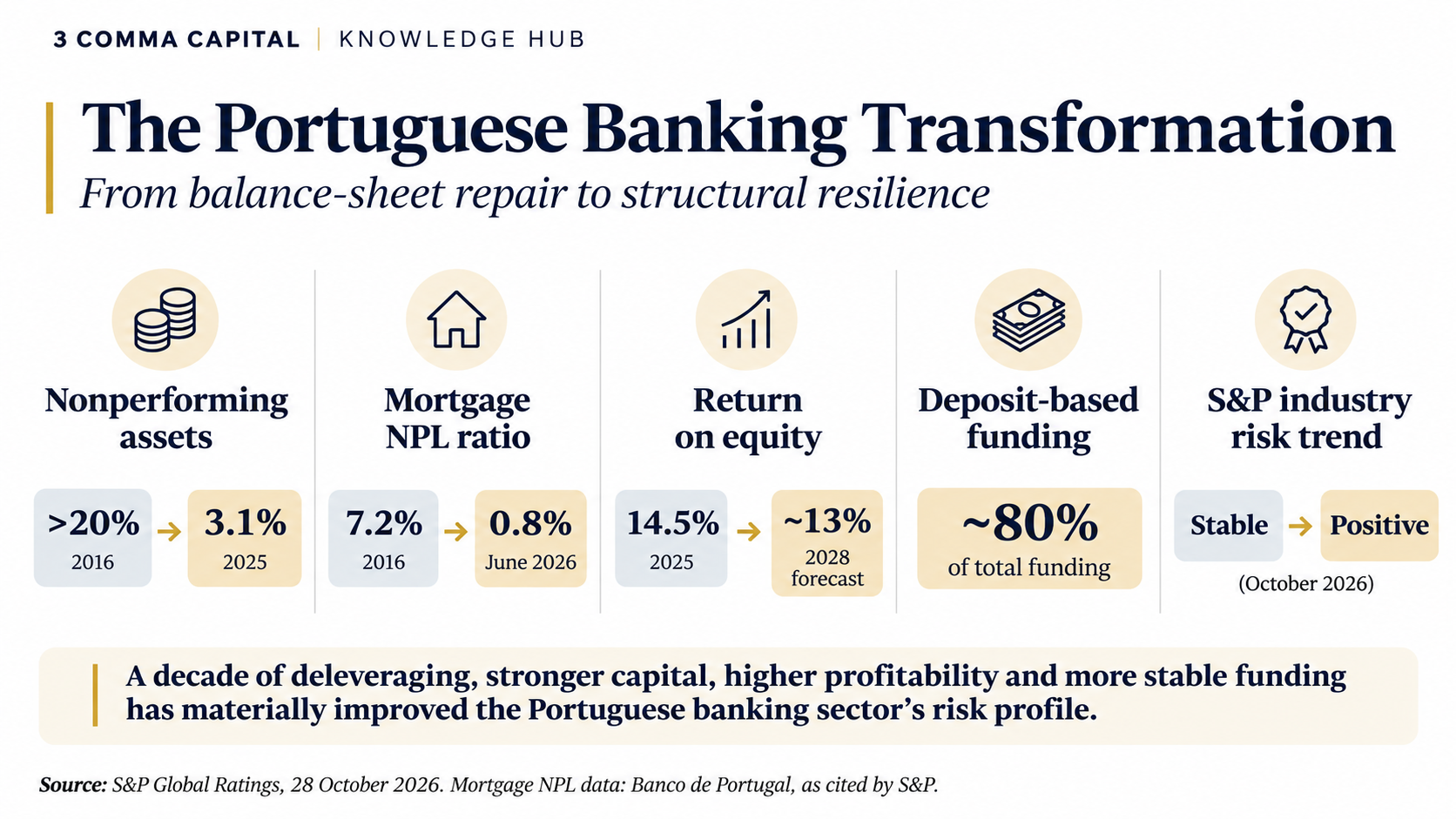
Portuguese banks have become highly profitable, well capitalized and comparatively efficient institutions, supported by a domestic economy that has demonstrated considerable resilience. This transformation is increasingly recognized by international rating agencies: on October 28th, 2026, S&P Global Ratings revised its industry risk trend for Portugal's banking sector from stable to positive, reflecting its assessment of improving competitive dynamics and sustainable profitability. The distinction matters because S&P is not merely acknowledging a period of strong earnings. Its assessment suggests that some of the improvements in the industry's risk profile may be structural rather than cyclical. If these trends are sustained, the agency could eventually improve its Banking Industry Country Risk Assessment (BICRA) for Portugal from group 4 to group 3, bringing the country into the same category as Spain and Ireland. Such a change would also raise the starting point used by S&P to assess banks operating primarily in Portugal from 'bbb' to 'bbb+', although it would not automatically translate into upgrades for every institution.
For investors, this is an important development: a banking system historically associated with elevated credit risk is increasingly being evaluated on the basis of its structural resilience and earnings capacity.
2. Profitability: More Than a Beneficiary of Higher Interest Rates
One of the most compelling characteristics of Portuguese banks is their ability to generate attractive returns on equity. S&P forecasts sector-wide ROE of approximately 13% through 2028, compared with 14.5% in 2025. Some moderation is therefore expected, but profitability would remain robust by historical standards. The key question is whether these returns can be sustained as interest rates, funding costs and credit conditions evolve.
The Structural Advantage of Deposit Funding
Portuguese banks benefit from large, established retail deposit franchises. Customer deposits account for approximately 80% of sector funding and more than fully finance outstanding loan books. This provides a meaningful advantage over institutions that depend more heavily on wholesale debt markets or other comparatively expensive funding sources.
The structure of Portuguese lending also matters. A substantial proportion of loans are linked to variable interest rates, allowing changes in monetary policy to feed relatively quickly into interest income. Deposit remuneration, by contrast, has historically adjusted more slowly. This asymmetry helped Portuguese banks benefit from the increase in European interest rates, supporting net interest margins and exceptional profitability. However, relying exclusively on favourable interest-rate conditions would be an incomplete investment thesis. The more important question is how much profitability remains once margins normalize.
Operating Efficiency as a Competitive Advantage
Portuguese banks have spent years reducing operating costs, consolidating branch networks, investing in digital distribution and simplifying their business models. The results are increasingly visible. S&P expects Banco Comercial Português (BCP), for example, to maintain a cost-to-income ratio of approximately 36% over the next two years, compared with a peer average of around 41%. For Caixa Geral de Depósitos (CGD), the agency forecasts a cost-to-income ratio close to 31% by 2028.
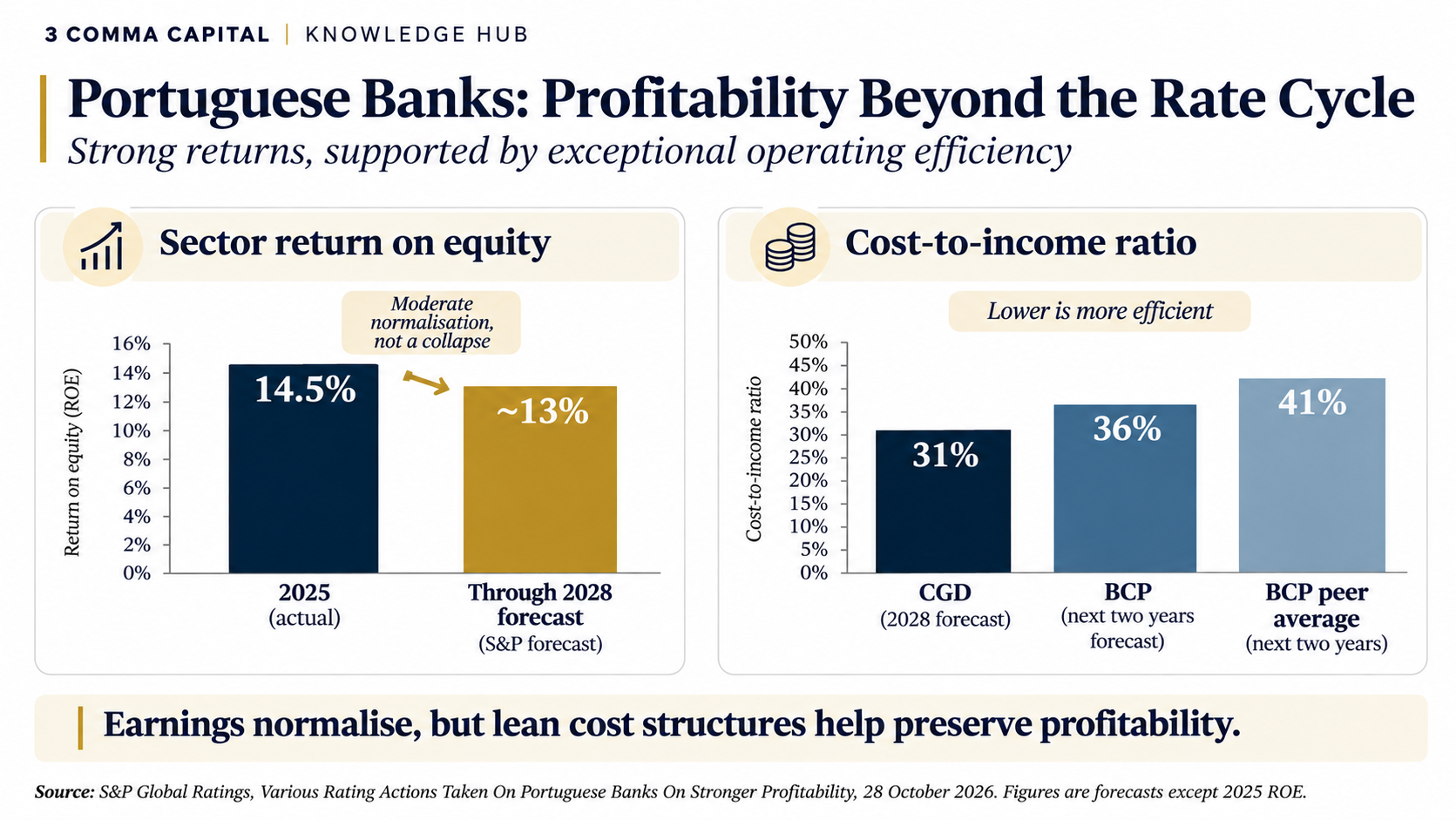
These efficiency levels are significant because they provide a buffer against revenue pressure. A bank operating with a structurally lower cost base can absorb a decline in net interest income more effectively than a less efficient competitor. It can also continue investing in technology, maintaining capital buffers and generating attractive shareholder returns without depending entirely on revenue growth.
Morningstar DBRS reinforced this distinction in its August 2026 review of Portuguese banks. Although first-half profitability had moderated from the exceptional levels of 2025, the agency highlighted resilient results, solid lending growth, robust capitalization and continuing improvements in asset quality. It also expected net interest income at most Portuguese banks to remain broadly stable or increase slightly over the full year.
The investment thesis is therefore evolving from a cyclical interest-margin story into a more durable combination of efficient operations, stable funding and disciplined balance-sheet management.
3. Asset Quality: An Important Evidence of Structural Change
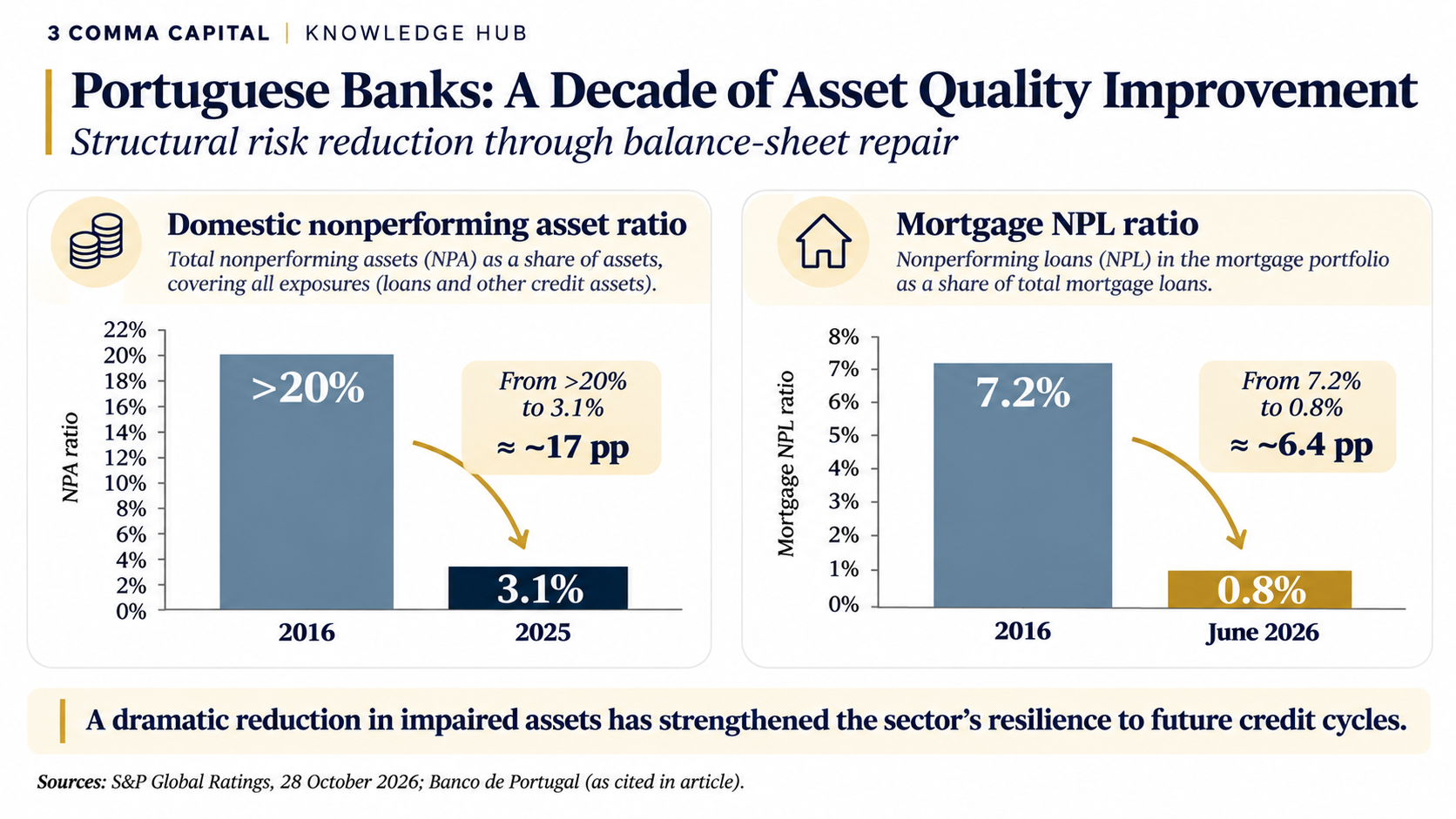
The improvement in Portuguese banks' credit quality is arguably the clearest indication of how profoundly the sector has changed. According to S&P, the banking system's domestic nonperforming asset ratio declined from more than 20% in 2016 to approximately 3.1% at the end of 2025. This represents a dramatic reduction in the stock of problematic exposures and reflects a combination of legacy loan resolution, stronger underwriting, balance-sheet restructuring and more favourable economic conditions. It has also reduced the resources that banks must devote to managing impaired loans.
The latest data reinforce the trend: according to Banco de Portugal, the sector's nonperforming loan ratio reached approximately 2.1% in June 2026, while the mortgage NPL ratio had fallen to just 0.8%, compared with 7.2% a decade earlier. The distinction between the two measures is important: S&P's broader nonperforming asset metric and Banco de Portugal's NPL ratio are not directly interchangeable. Nevertheless, both demonstrate a sustained improvement in asset quality.
A More Resilient Mortgage Portfolio
Residential mortgages account for approximately half of Portuguese banks' total lending, making household credit performance central to the sector's outlook. Portugal's mortgage market has several characteristics that warrant attention: variable-rate lending exposes borrowers to changes in financing costs, while the rapid increase in property prices has created affordability pressures, particularly in Lisbon, Porto and coastal markets. Yet mortgage credit quality has remained resilient despite recent interest-rate volatility.
A strong labour market, lower household leverage than in previous cycles and more disciplined lending standards have helped contain defaults. S&P expects the sector's nonperforming asset ratio to remain below 3.5% through 2028, with credit losses of approximately 30–35 basis points. These forecasts imply some normalization, rather than a continuation of exceptionally benign credit conditions.
A sustainable banking investment case does not require credit losses to remain at historical lows. It requires banks to generate sufficient earnings and maintain enough capital to absorb a normalization in credit costs without materially weakening their financial position. On current projections, Portuguese banks appear well positioned to do so.
4. Capital Strength and Liquidity: A Different Risk Profile
Strong profitability is valuable, but its investment significance depends on the resilience of the balance sheet supporting it. Portuguese banks have made substantial progress on this front: Banco de Portugal data show that the banking sector's Common Equity Tier 1 (CET1) ratio reached approximately 18.2% in June 2026, compared with 14.3% at the end of 2019.
The improvement reflects years of retained earnings, capital rebuilding and more disciplined risk management.
Liquidity positions are equally important: the IMF's 2026 Financial System Stability Assessment highlighted Portuguese banks' substantial liquidity buffers, with the sector's liquidity coverage ratio reaching approximately 260% in June 2025, compared with a euro-area median of 183%. These ratios provide protection against funding disruptions and unexpected liquidity needs.
The sector's dependence on external funding has also declined materially. S&P notes that Portuguese banks have increasingly accessed international capital markets primarily to meet regulatory requirements for loss-absorbing liabilities, rather than to finance ordinary lending activity. This is a significant departure from the funding vulnerabilities that characterized earlier periods.
What the IMF Stress Tests Tell Us
The IMF's June 2026 assessment provides an additional perspective on resilience. Its analysis found that Portuguese banks could withstand severe adverse macroeconomic scenarios without breaching their combined regulatory capital buffers. In the IMF's recessionary stress scenario, the aggregate CET1 ratio declined to approximately 16.3% by 2028, compared with 18.8% under the baseline scenario. The tests are not guarantees of future performance, and individual institutions may experience materially different outcomes. Nevertheless, they suggest that the system has accumulated meaningful capacity to absorb losses.
For fixed-income investors, this is important: a well-capitalised bank with diversified funding and strong recurring earnings is generally better positioned to service debt obligations and withstand periods of market stress. For equity investors, excess capital can create flexibility for dividends, share buybacks, reinvestment and balance-sheet expansion.
Capital strength is therefore not simply a defensive characteristic. It can also support future shareholder distributions and reduce the risk premium demanded by creditors.
5. Portugal's Resilience Reinforces Banks Investment Case
The transformation of Portuguese banking has taken place alongside a broader improvement in the country's economic fundamentals. Stronger public finances, resilient employment, recovering investment and an increasingly diversified economy have created a more supportive environment for financial institutions.
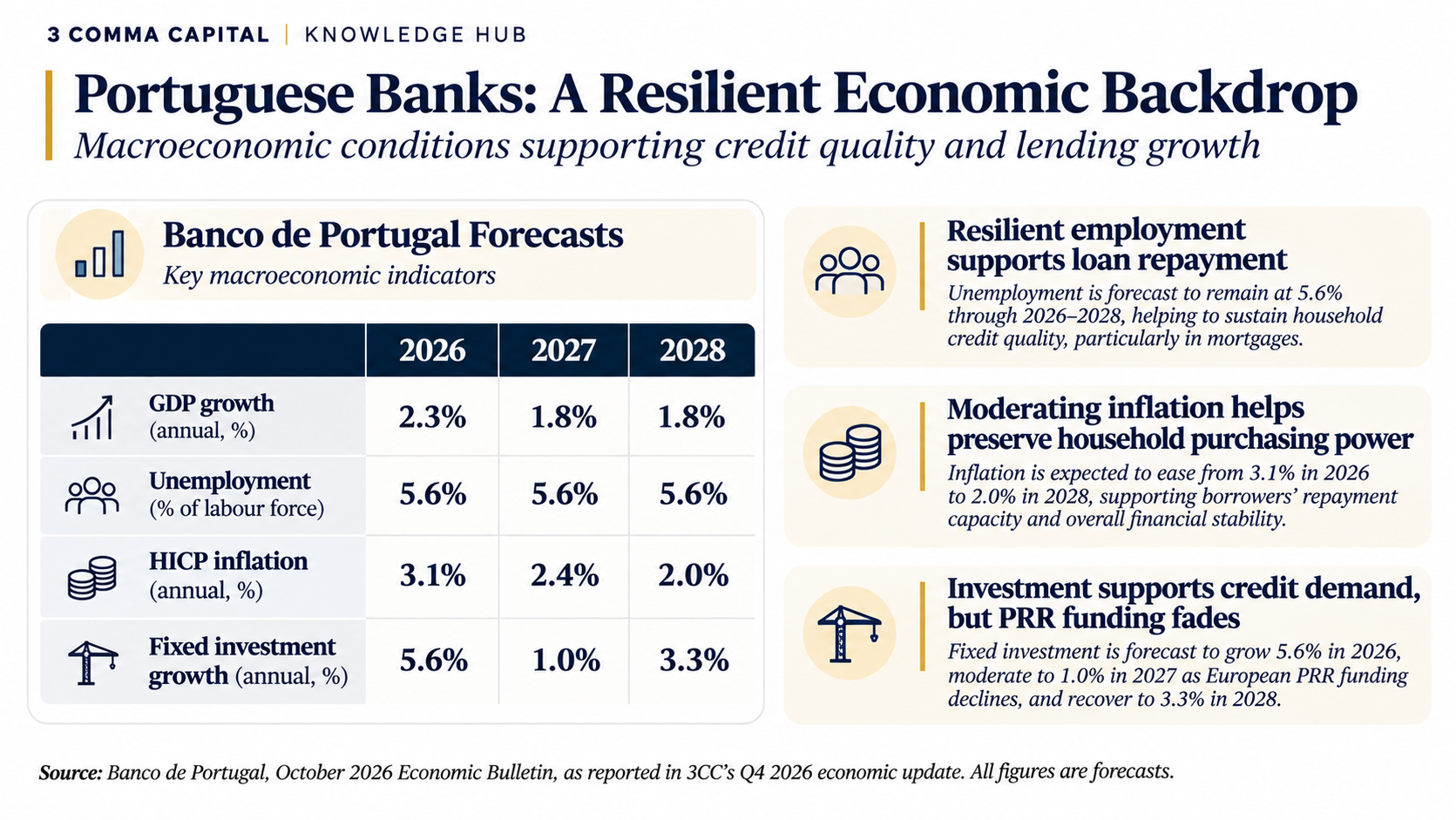
The latest projections from Banco de Portugal reinforce this outlook. In its October 2026 Economic Bulletin, the central bank revised its GDP growth forecast for 2026 from 1.8% to 2.3%, reflecting stronger-than-expected domestic demand, accelerating investment and improving export performance. Growth is expected to moderate to 1.8% in both 2027 and 2028, remaining supported by household consumption and private-sector activity.
For Portuguese banks, the composition of this growth is particularly relevant.
Household Resilience Supports Credit Quality
Private consumption is projected to increase by 3.1% in 2026, supported by employment, wage growth and fiscal measures that have strengthened household purchasing power. More importantly, Banco de Portugal expects unemployment to remain at approximately 5.6% throughout 2026–2028, providing a favourable backdrop for household debt servicing and mortgage performance. This matters in a banking system where residential mortgages represent approximately half of total lending. A resilient labour market reduces the probability of widespread borrower distress and supports the sustainability of the improvements in asset quality achieved over the past decade.
Inflation remains a concern, with Banco de Portugal forecasting 3.1% in 2026 before moderating to 2.4% in 2027 and 2.0% in 2028. While persistent price pressures could affect household disposable income, the projected normalization would help preserve borrowers' repayment capacity. For banks, the combination of moderate economic growth, low unemployment and gradually easing inflation is more valuable than rapid expansion accompanied by deteriorating household balance sheets.
Investment and Credit Growth Create New Opportunities
Investment represents another potential source of banking-sector growth. Banco de Portugal expects gross fixed capital formation to increase by 5.6% in 2026, supported by the final implementation phase of Portugal's Recovery and Resilience Plan (PRR), infrastructure development and business investment. This expansion can generate opportunities for corporate lending, project financing and other banking services, particularly as companies invest in digitalisation, energy infrastructure and productive capacity. However, the investment cycle is expected to moderate sharply in 2027, with fixed investment growth slowing to just 1.0% as extraordinary European funding declines. The sustainability of future credit expansion will therefore depend increasingly on private investment rather than temporary public stimulus. This distinction is important when assessing S&P's forecast of approximately 5% annual loan growth in 2027 and 2028. Such growth would be encouraging, but its investment value will ultimately depend on underwriting discipline, borrower quality and the returns generated on additional lending.
An Improving Sovereign Credit Profile
Portugal's economic resilience has been accompanied by significant fiscal consolidation and improvements in sovereign creditworthiness. This is important because the relationship between banks and their domestic sovereign has historically been an important source of financial-system vulnerability. A stronger sovereign credit profile can support confidence in the domestic financial system, improve perceptions of country risk and contribute to more favourable funding conditions for Portuguese issuers. The benefits are not automatic, particularly during periods of wider European sovereign-market volatility. Nevertheless, the simultaneous strengthening of public finances and bank balance sheets represents an important structural difference from previous economic cycles.
The investment case for Portuguese banks is therefore supported by two mutually reinforcing developments: stronger financial institutions operating within a more resilient domestic economy.
The main challenge will be maintaining this progress as European investment support fades, employment growth moderates and the economy becomes increasingly dependent on productivity improvements and private-sector investment. For investors, this reinforces the importance of distinguishing between banks benefiting from temporary cyclical conditions and those with the operational efficiency, capital strength and underwriting discipline to generate sustainable returns throughout the economic cycle.
For a more detailed assessment of the macroeconomic outlook, read our Snapshot of the Portuguese Economy: Q4 2026 Update.
6. A Concentrated Banking Market With Improving Dynamics
Portugal's banking sector is highly concentrated. The five largest banks account for approximately three quarters of system assets, while more than half of banking assets are controlled by foreign shareholders. This structure has important implications: large incumbent banks benefit from established customer relationships, extensive distribution networks, brand recognition and substantial deposit franchises. These characteristics can create barriers to entry and support relatively stable market positions.
Concentration alone does not guarantee pricing power or attractive returns. Competition for deposits and lending can still be intense, particularly as digital banking and new financial platforms expand. Nevertheless, Portugal's banking structure has evolved towards a smaller number of better-capitalised institutions operating within a more disciplined competitive environment.
International ownership has also played a role: spanish banking groups control important Portuguese franchises, while France's BPCE completed the acquisition of Novo Banco.
S&P views the presence of stronger international banking parents positively, noting their capacity to provide financial and operational support.
For investors, this creates a differentiated market. Some institutions offer exposure to the Portuguese banking sector through independently managed domestic franchises. Others benefit from the resources, funding capabilities and strategic support of larger European banking groups. These differences are particularly important when analysing individual issuers and their securities.
7. The Rating Agencies Are Recognising the Change
The October 2026 S&P assessment provides one of the clearest signals that the sector's improvement is becoming embedded in external credit analysis. The agency took several rating actions, reflecting the different financial profiles and support structures of Portuguese banks.
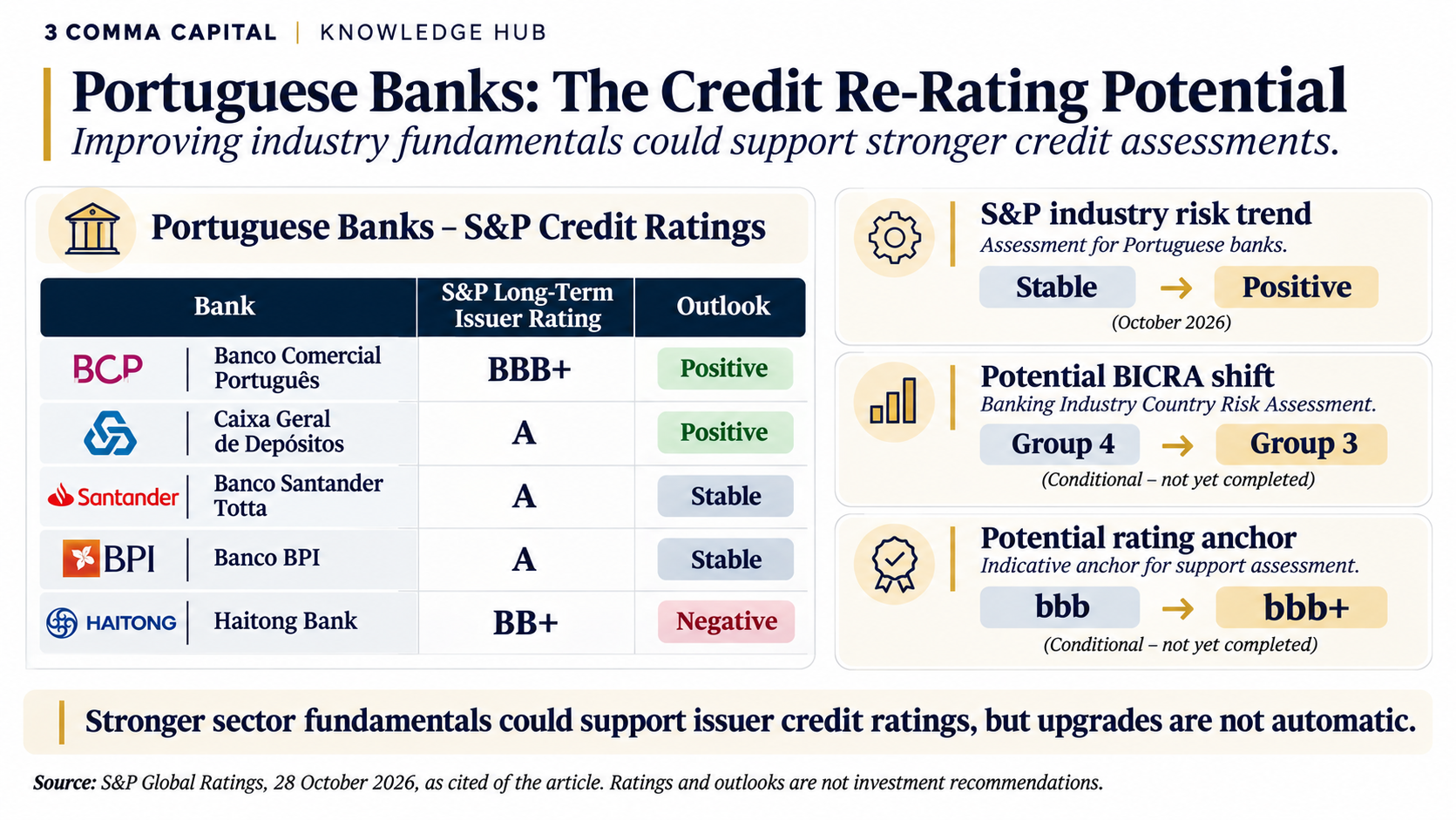
Ratings and outlooks reflect S&P Global Ratings' October 28, 2026 report. Ratings are opinions of creditworthiness, not investment recommendations.
Banco Comercial Português: A Potential Credit Re-Rating
BCP is particularly interesting because its investment case combines strong domestic profitability with improving credit fundamentals. S&P revised its outlook on the bank from stable to positive while affirming its BBB+ long-term issuer rating. The agency expects BCP to maintain ROE close to 15%, a cost-to-income ratio of approximately 36% and a risk-adjusted capital ratio near 12.5% over the coming two years. The reduction in legacy provisions associated with Swiss franc-denominated mortgages in Poland is another potentially important earnings driver.
S&P also anticipates substantial shareholder distributions, with a projected total payout ratio of approximately 75%, including dividends and some share buybacks. This creates a potentially attractive combination of profitability, capital strength and shareholder remuneration. However, a positive rating outlook should not be confused with a guaranteed upgrade.
S&P's assessment remains conditional on continued asset-quality resilience, capital strength and a more favourable industry-risk assessment.
BCP also illustrates why security selection matters: the investment case for its shares is different from that for its senior preferred, senior nonpreferred or subordinated debt.
Caixa Geral de Depósitos: Scale, Funding and Capital Strength
CGD benefits from its leading position in Portuguese retail banking and a substantial domestic deposit franchise. S&P affirmed its A long-term issuer rating with a positive outlook, reflecting the bank's strong standalone financial profile and the rating agency's assessment of potential extraordinary government support. The agency expects CGD to maintain ROE close to 14% and a cost-to-income ratio of approximately 31% by 2028. Its substantial capital buffers and deposit base provide important competitive advantages.
For credit investors, CGD illustrates how a strong domestic franchise, substantial capitalisation and potential sovereign support can combine to support a relatively high credit rating. However, like always, the attractiveness of any particular bond still depends on its yield, maturity, seniority and contractual terms.
Santander Totta and BPI: The Value of Strong Banking Parents
Santander Totta and BPI benefit from their positions within major international banking groups. Both retained A long-term issuer ratings with stable outlooks in S&P's October assessment. Their ownership structures can provide operational advantages, access to group resources and potential financial support and these institutions may therefore offer a different risk-return profile from independently managed Portuguese banks.
For investors, the relevant comparison is not simply between banks operating in the same country, but between their standalone creditworthiness, group relationships and the specific securities available in the market.
8. The Investment Opportunity: Equities and Bank Debt
The transformation of Portuguese banking creates opportunities across different parts of the capital structure. However, strong sector fundamentals do not automatically make every security attractive. The investment case must ultimately be assessed relative to the price paid and the risks assumed.
Equity: Sustainable Returns and Capital Distributions
For equity investors, the central question is whether Portuguese banks can sustain returns on equity above their cost of equity. If a bank consistently generates ROE above its required return, it creates economic value for shareholders. In principle, this can support higher valuations relative to book value, particularly where earnings are predictable and capital requirements are manageable. The sector's combination of strong profitability, efficiency and capitalisation is therefore encouraging.
Dividend distributions and share buybacks may provide an additional source of shareholder returns. However, the relationship between profitability and valuation is critical: a bank generating 13%–15% ROE may be attractive at one valuation and considerably less compelling at another. Investors should therefore assess price-to-tangible-book multiples, expected earnings growth, the sustainability of capital distributions and the potential for credit losses to normalize.
The opportunity is not simply to buy profitable banks. It is to identify institutions where the market may be underestimating the durability of those profits.
Fixed Income: Improving Creditworthiness and Attractive Carry
For bond investors, the investment thesis is different. The principal attraction lies in the capacity of stronger banks to service their obligations, maintain regulatory capital and withstand adverse economic conditions. A more favourable assessment of Portuguese banking-sector risk could eventually contribute to lower credit spreads, particularly where individual issuers benefit from rating upgrades or improved market perceptions. This creates the possibility of returns from both contractual income and spread compression. However, bank debt is not a homogeneous asset class: senior preferred bonds, senior nonpreferred instruments, Tier 2 subordinated debt and Additional Tier 1 securities occupy different positions in the capital structure and carry materially different risks.
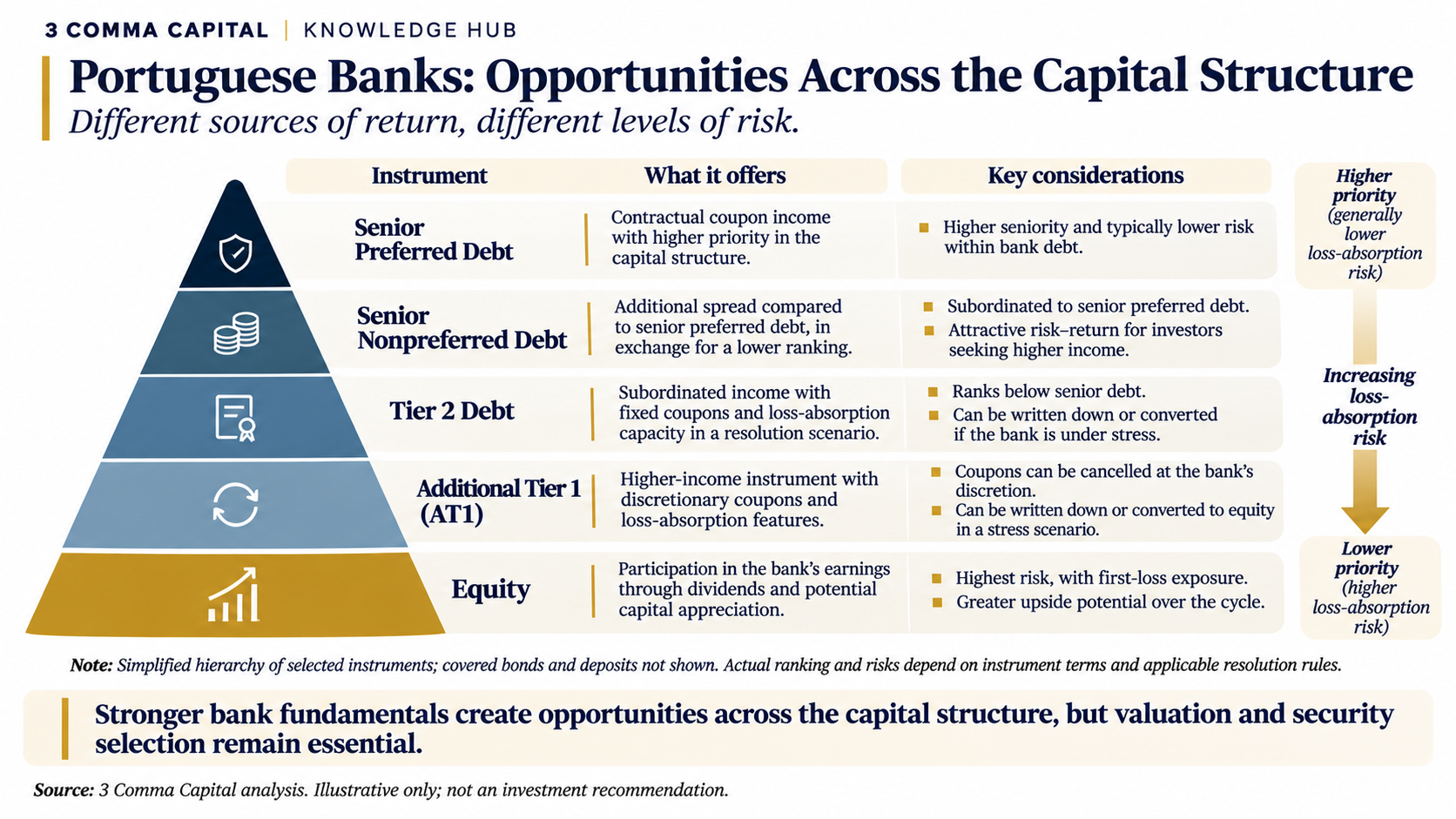
Higher yields may compensate investors for subordination, loss-absorption mechanisms, extension risk or other contractual features. A positive sector outlook therefore does not eliminate the need for issuer-level and instrument-level credit analysis. In a market where European credit spreads may already reflect substantial optimism, the strongest opportunities are likely to emerge from selective relative-value analysis rather than indiscriminate exposure.
The Importance of Selectivity
A rigorous investment process should distinguish between three potential sources of return:
- Fundamental improvement: Stronger earnings, capitalisation and asset quality increase the intrinsic resilience or value of an institution.
- Market revaluation: Investors become willing to pay higher equity multiples or accept lower credit spreads as perceived risk declines.
- Contractual or distributed income: Dividends, share buybacks and bond coupons contribute to total returns independently of valuation changes.
These sources of return interact, but they are not interchangeable. For example, a bank may continue reporting excellent results while its shares underperform because expectations were already too optimistic. Similarly, a high-quality bank bond may offer limited upside if its spread is already exceptionally tight.
The most attractive investments are those where strong fundamentals, reasonable valuations and an identifiable source of future returns coincide.
9. What Could Challenge the Investment Thesis?
Despite the sector's progress, several risks deserve close attention.
Housing Prices and Affordability
Portugal's residential property market has experienced exceptionally strong price appreciation. S&P estimates that nominal house prices increased by almost 19% in 2025, following average annual increases of approximately 10% over the preceding eight years. The agency expects price growth to moderate towards 5%–10% through 2028.
Even at a slower pace, rising property prices can create affordability challenges and increase the sensitivity of new borrowers to adverse economic developments. The IMF has also identified the interaction between housing prices, credit growth and household indebtedness as an important area for monitoring: a significant property-market correction would not necessarily produce a banking crisis, given the sector's capital buffers and improved lending standards. Nevertheless, it could affect credit growth, collateral values and loan-loss provisions.
Interest-Rate and Margin Sensitivity
Portuguese banks benefited substantially from higher interest rates, particularly because loan yields adjusted more quickly than deposit costs. A prolonged decline in policy rates could compress margins, especially if deposit remuneration proves less flexible on the downside. Conversely, a renewed increase in rates could support asset yields while placing pressure on borrowers. The relevant question is not whether higher or lower rates are universally beneficial, but how each bank manages its asset-liability structure and funding costs across different scenarios.
Credit Growth and Underwriting Discipline
The transition from deleveraging to renewed credit expansion creates opportunities but also introduces risks. Competitive pressure could encourage banks to loosen underwriting standards or accept lower risk-adjusted returns. Monitoring loan-to-value ratios, borrower affordability, sector concentration and early signs of credit deterioration will therefore become increasingly important.
Valuation and Market Expectations
Finally, a strong fundamental story can become a less attractive investment if it is fully reflected in market prices. Equity investors must assess whether expected profitability and distributions justify prevailing valuations. Bond investors must determine whether available spreads adequately compensate for credit, liquidity, duration and subordination risks.
Improving credit ratings may support sentiment, but they do not guarantee positive investment returns.
10. A Structural Investment Case, Not Simply a Cyclical Recovery
The transformation of Portuguese banking is one of the more significant developments in the country's financial system over the past decade. The sector has moved from a period defined by impaired assets, capital constraints and funding vulnerabilities to one characterised by strong liquidity, substantial capital buffers and attractive profitability. Importantly, this progress has been accompanied by improvements in the broader Portuguese economy and sovereign credit profile:
- S&P's October 2026 decision to revise its industry risk trend to positive provides additional evidence that these changes are increasingly recognised as structural.
- The IMF's stress tests reinforce the conclusion that the system is considerably better equipped to withstand adverse shocks than it was during the previous banking cycle.
- Morningstar DBRS's assessment of first-half 2026 results also suggests that profitability can remain resilient even as the exceptional benefits of the interest-rate cycle moderate.
- Banco de Portugal's latest economic projections provide a further source of support.
► Bottom Line
Portugal's banking transformation is particularly compelling because it has coincided with a broader strengthening of the country's economic fundamentals, creating a more favourable environment for sustainable profitability, credit growth and balance-sheet resilience. Taken together, these developments support a constructive medium-term view of Portuguese banks.Nevertheless, the investment case should not rest on the assumption that the sector will continue to deliver record earnings or that credit quality will remain permanently at cyclical lows. A more credible thesis is that Portuguese banks have established stronger business models capable of generating attractive risk-adjusted returns through a wider range of economic conditions.
For equity investors, the opportunity lies in identifying banks whose sustainable earnings power and capital-distribution capacity are not fully reflected in valuations.
For fixed-income investors, it lies in identifying issuers and instruments where improving creditworthiness, robust balance sheets and appropriate credit spreads create attractive risk-adjusted carry.
The distinction matters because the best investment opportunities rarely emerge from a positive economic narrative alone. They emerge when structural improvement is combined with disciplined valuation and security selection.
Portugal's banks have already demonstrated that their recovery is real. The next question for investors is which institutions, and which securities, offer the most attractive way to participate in that transformation.
Sources and Further Reading
S&P Global Ratings (28 October 2026). Various Rating Actions Taken On Portuguese Banks On Stronger Profitability. Primary research report supplied for this article. Includes sector profitability forecasts, industry-risk assessment, rating actions and individual bank credit analysis.
Banco de Portugal (October 2026). Economic Bulletin. Macroeconomic projections for Portugal, including GDP growth, private consumption, investment, unemployment and inflation. See also 3 Comma Capital: Snapshot of the Portuguese Economy, Q4 2026 Update.
International Monetary Fund (June 2026). Portugal: Financial System Stability Assessment. Analysis of banking-sector resilience, capital adequacy, liquidity, credit risks and adverse-scenario stress tests.
IMF Financial System Stability Assessment
Morningstar DBRS (12 August 2026). Portuguese Banks: Solid H1 2026 Results Supported by Strong Lending Growth. Review of earnings, margins, credit quality and capitalisation.
Banco de Portugal. Financial Stability Indicators. Official banking-sector statistics covering nonperforming loans, profitability and capital ratios.
Banco de Portugal Financial Stability Indicators
European Commission (June 2026). 2026 Country Report: Portugal. Assessment of the Portuguese economy, financial sector and structural developments.
Disclaimer: This article is provided for general information and market commentary only. It does not constitute investment advice, an investment recommendation or an offer to buy or sell any financial instrument. References to specific banks are illustrative and do not imply that their securities are suitable for any particular investor. Bank equities and debt instruments carry risks, including market, credit, liquidity and potential loss of capital. Credit ratings and forecasts are subject to change. Investors should consult current financial information and applicable fund documentation before making investment decisions.


